On this page
How Much to Charge for Photo Licensing: The Short Answer
How much to charge for photo licensing depends on how the photo will be used, not on the photo alone. The same image might be worth a modest fee on a small business website and many times more on national packaging. So the real answer is a method: find out the use, start from a base rate you are comfortable with, adjust it for reach, duration, territory and exclusivity, and check the result against benchmarks.
- Price the use, not the file. Commercial, wide, long, worldwide and exclusive all push the fee up.
- Ask before you quote. Media, size, audience, term, territory and exclusivity.
- Set a base rate and apply the same adjustments every time, so your prices are consistent and explainable.
- Check benchmarks: agency price lists, your trade association’s guidance, and peers.
- Offer options, put the license in writing, and deliver the clean file after payment.
The Factors That Set a Licensing Fee
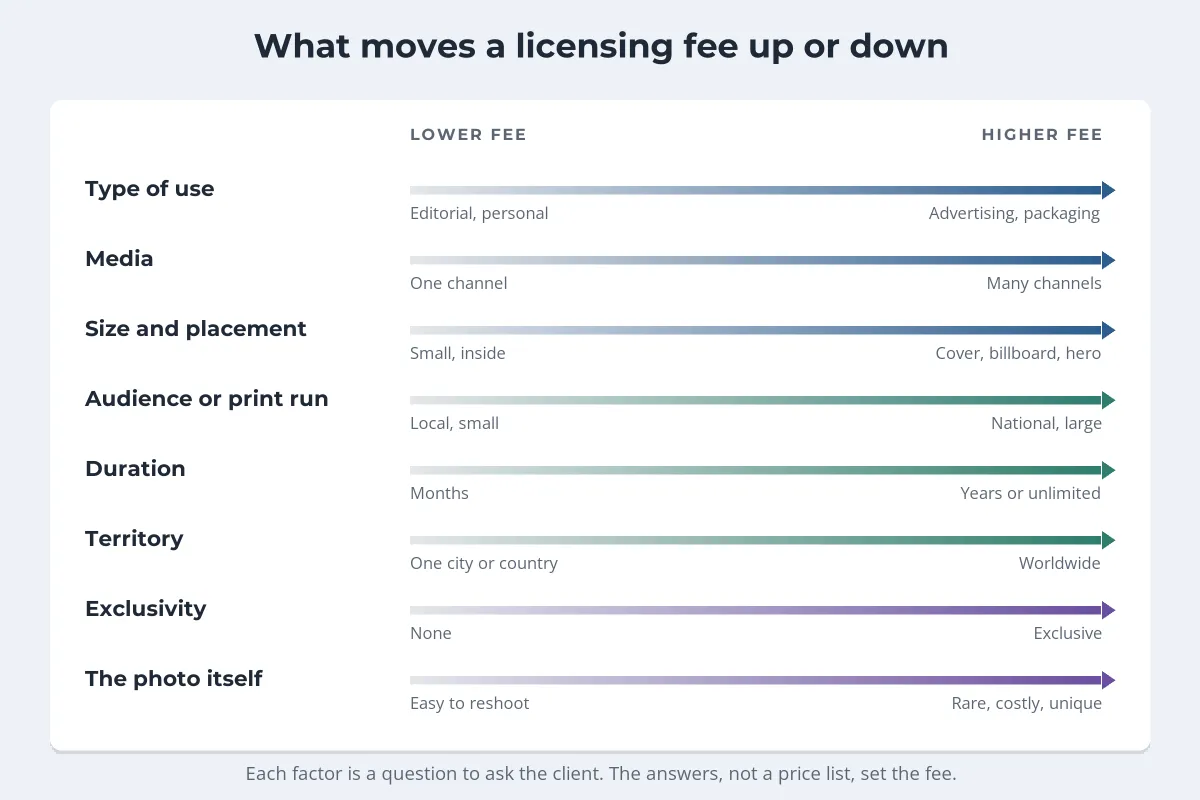
- Type of use. Advertising and packaging sell something, so they are worth more than editorial or personal use.
- Media. One website is one use; website, brochures, social ads and point of sale are several.
- Size and placement. A cover, billboard or homepage hero is worth more than a small image inside.
- Audience or print run. A local newsletter and a national campaign are different markets.
- Duration. Longer terms cost more; an unlimited term costs the most.
- Territory. One country, a region, or worldwide. For web use, think about who the site actually reaches.
- Exclusivity. If you cannot license the photo to anyone else, you are giving up future sales and should be paid for it.
- The photo itself. A rare moment or an expensive shoot is worth more than an image that is easy to reproduce.
These are the same terms a written license should spell out, as how to license your photos explains. Pricing and license terms are two sides of one conversation.
Start With What the Client Needs
Most clients have not thought about usage when they first ask. Asking the right questions helps them, and it is the only way to quote fairly.
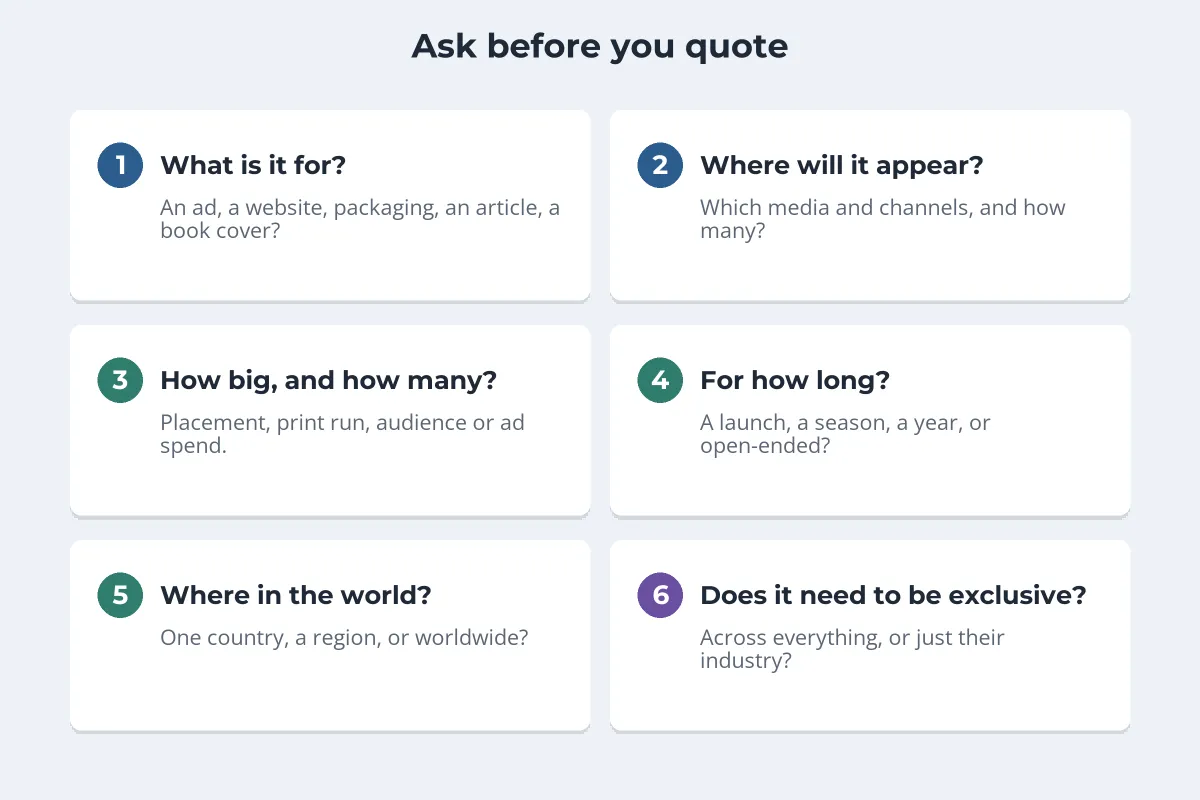
If the client cannot answer yet, quote for the use they are sure of and offer to extend the license later. Vague requests such as "all media, forever" deserve a high price, because they cover every use you could otherwise have sold separately.
A Simple Way to Build a Quote
A method many professionals use is to set a base rate for a simple, defined use, then scale it up or down for everything beyond that. The UK’s Association of Photographers (AOP) formalizes this for commissioned advertising work as the Base Usage Rate, or BUR.
- The base rate is your floor. The AOP suggests the BUR "should never be less than the negotiated daily shoot-fee or day-rate."
- Extra use is a percentage of it. The AOP’s online Usage Calculator applies percentages for media, territory and duration to the BUR. Countries are banded by GDP: the United States, for example, is in the A+ band, where additional use costs 150% of the BUR.
- The result is a starting point. The AOP stresses its figures "are a starting point for discussion" and are designed mainly for the advertising sector.
You do not need to be an AOP member or work in advertising to borrow the logic. Decide your base rate for, say, one year of use on one website in your home country. Then write down how much more you charge for each extra medium, each extra year, a wider territory and exclusivity. Apply the same table to every request, and your quotes stay consistent, quick to produce and easy to justify.
For a commission, the shoot fee often includes a first use, and extra use is priced on top. For a photo you already have, the license fee is the whole price. Either way, a buyer asking for all rights forever is asking for something close to a buyout, which should be priced accordingly. See who owns the photos for how ownership and licenses differ.
Where to Find Benchmark Pricing
Benchmarks keep your base rate realistic. None of them is a price you must charge, and figures change, so check current versions:
| Source | What it gives you | Best for |
|---|---|---|
| Stock agency price lists | Published royalty-free prices and license tiers, such as copy caps and extended licenses | Knowing the low end a buyer can compare you with |
| AOP Usage Calculator (UK) | Percentages for media, territory and duration applied to your base rate | Advertising and commissioned work |
| ASMP (US) | Business and licensing resources and forms for members | US photographers building a licensing practice |
| PLUS Coalition | A glossary of over 1,000 standardized licensing terms and a license generator | Describing a use precisely, so it can be priced |
| Peers, agents and buyers | What similar uses actually sold for | Your niche and your market |
Stock prices are a floor, not a target. They reflect huge volume, non-exclusive rights and no conversation with the buyer. A direct license for a specific, high-value use is a different product, priced by the use rather than the file; royalty-free vs rights-managed explains why.
Presenting the Quote
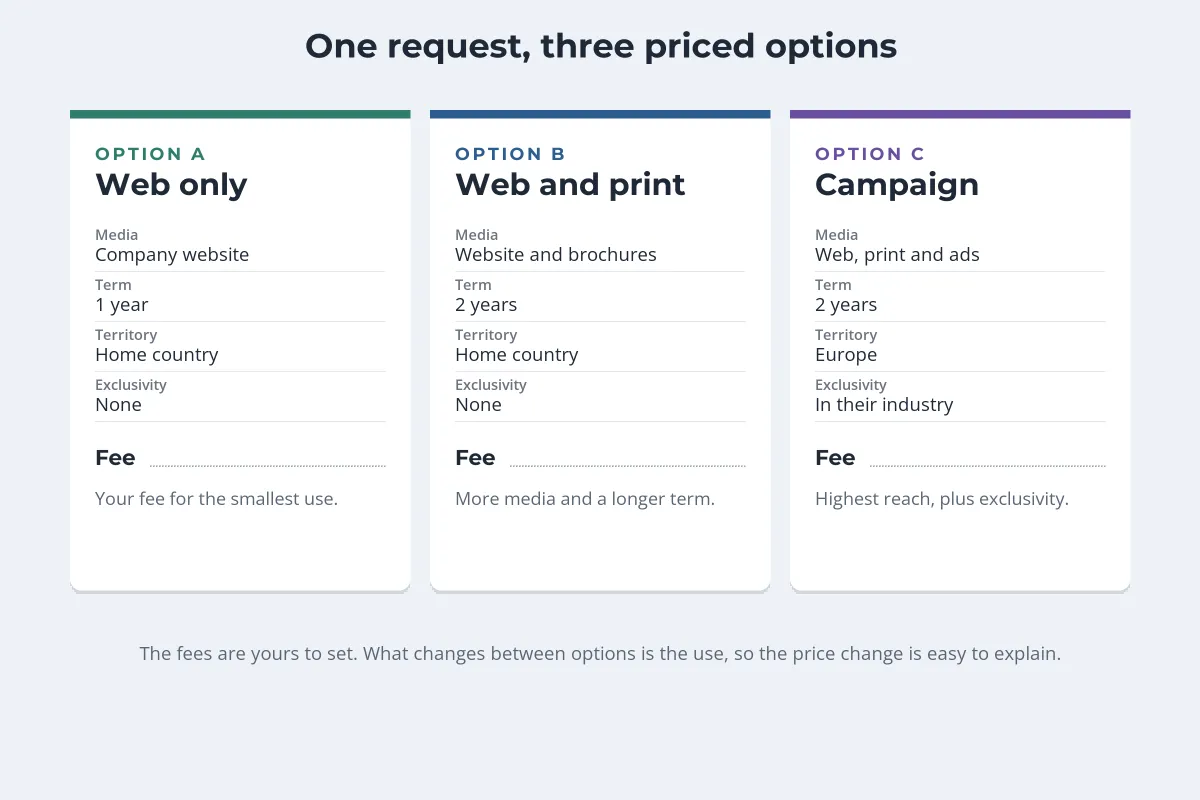
Clients find it easier to say yes when they can choose. Three options built from the same factors make the trade-offs obvious:
-
Describe each option in license terms
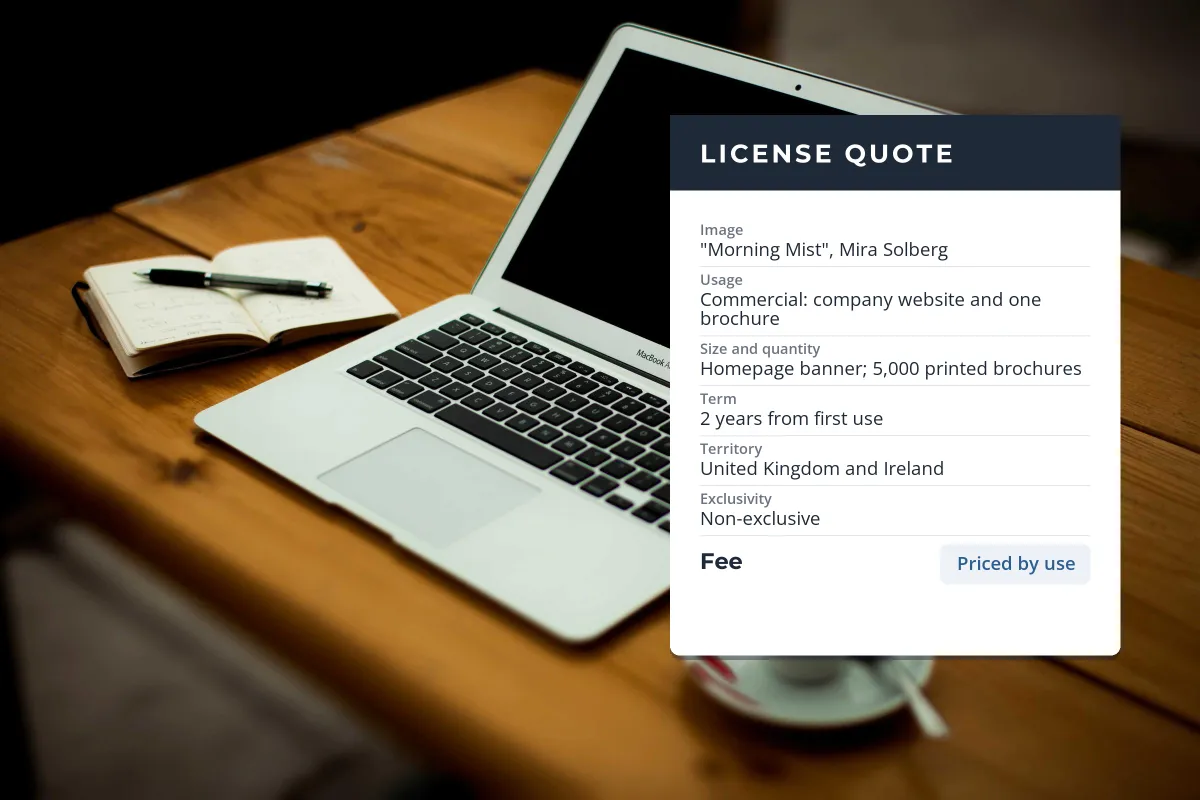
Media, size or quantity, term, territory and exclusivity, with the exact image identified.
-
State the fee and what it excludes
Anything not listed needs a new license. Say how long the quote is valid.
-
Set payment terms
For new clients, payment before delivery of the clean file is common.
-
Put the agreed option in writing
A signed license, or at least a written confirmation of the terms, avoids disputes about what was bought.
Pricing a Use That Already Happened
Sometimes the first you hear of a use is when you find your photo on someone’s site. Many photographers start by sending an invoice for a retroactive license, priced with the same method as any other quote; some add a premium because the use was never agreed. Being able to show your normal pricing makes that invoice much easier to defend.
If it goes further, the law matters. In the United States, copyright owners can choose statutory damages instead of proving actual losses: between $750 and $30,000 per work, and up to $150,000 if the infringement was willful (17 U.S.C. § 504(c)). They are generally only available for works registered before the infringement began or within three months of publication, which is one reason to consider registering your photo copyright. Other countries handle damages differently. For the practical steps, see what to do when someone steals your photos.
Protect the Photo Until the License Is Paid
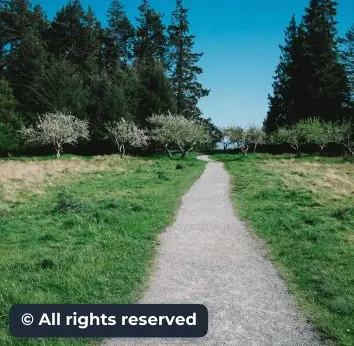
While you negotiate, the client often needs to see the photo in their layout. Send a small, watermarked preview, and keep the clean, full-resolution file until the license is agreed and paid.
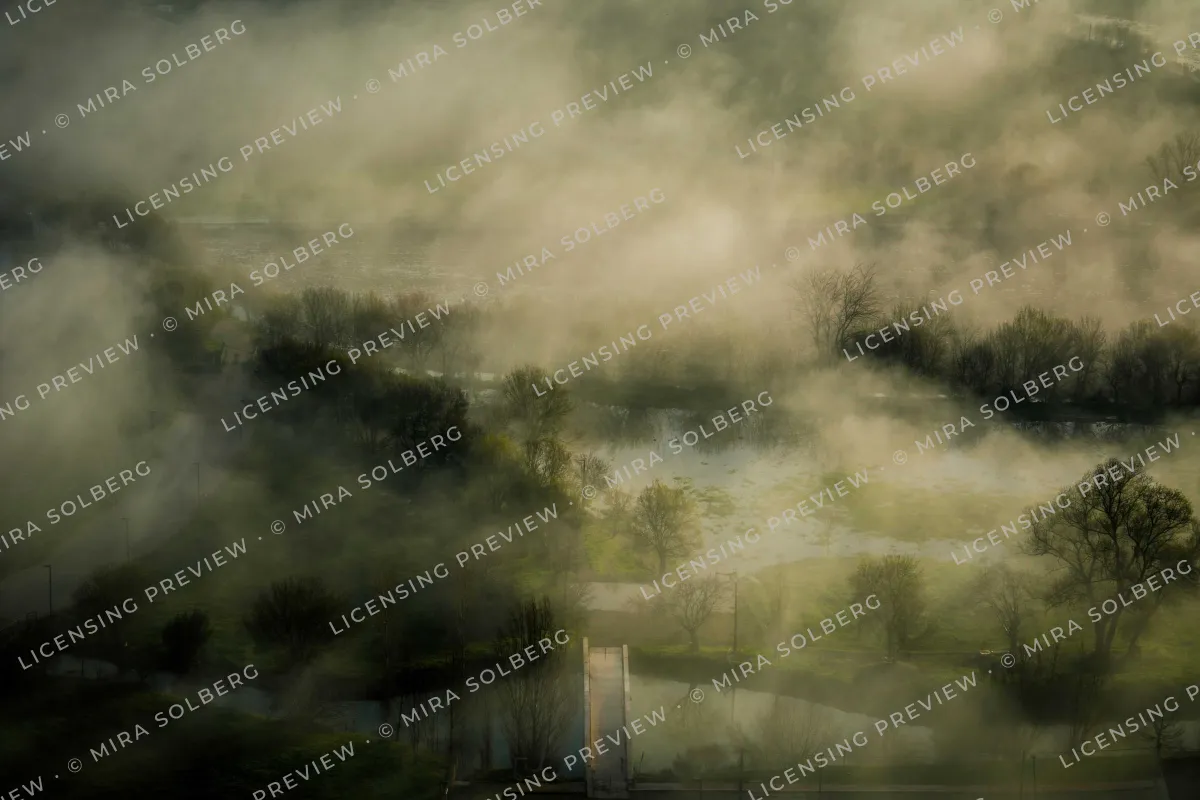
In Watermark.ws you can tile a line such as "Licensing preview · © Your Name" across one photo or a batch, resize the previews in the same pass, and save the setup as a template for every request. Your originals are never changed, so the clean file is ready the moment the license is signed.
Sample photos: Laptop on a desk by Alejandro Escamilla, Misty valley by Luís Perdigão on Unsplash.