On this page
Royalty-Free vs Rights-Managed: The Short Answer
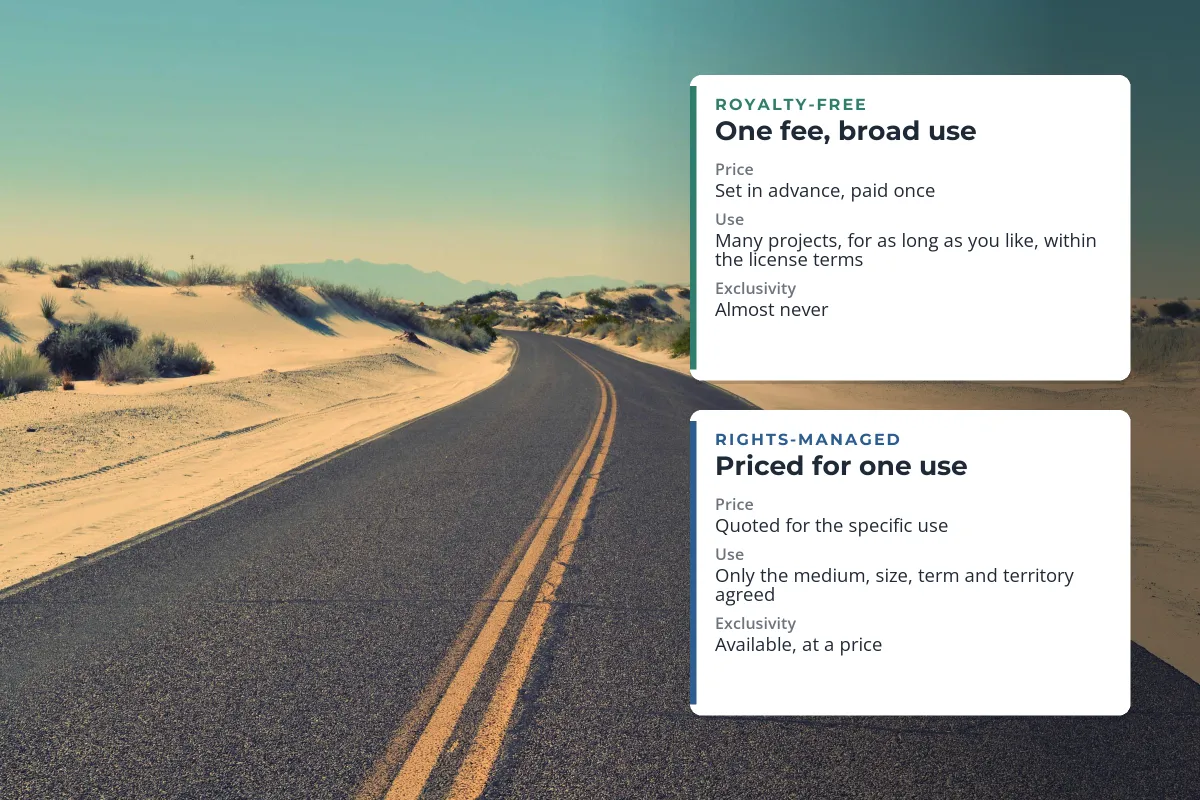
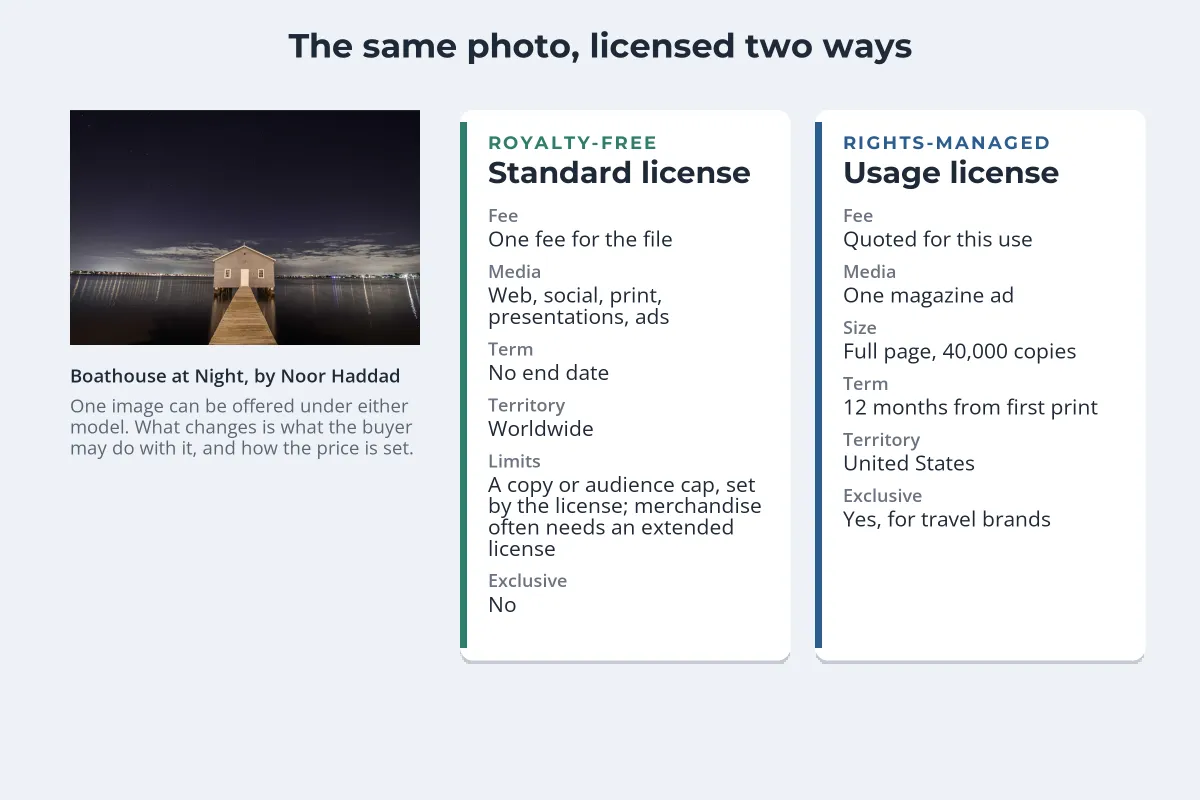
Royalty-free (RF) and rights-managed (RM) are the two classic models for licensing photos. With a royalty-free license, the buyer pays once and can use the photo broadly, in many projects and for as long as they like, within the license terms. With a rights-managed license, the buyer pays for one defined use: a specific medium, size, period and territory. Neither model sells the copyright; the photographer keeps it either way.
- Royalty-free means one fee, broad use, no end date, and almost never exclusive. It does not mean free.
- Rights-managed means priced per use, limited to what was agreed, and exclusivity is possible.
- Editorial vs commercial is a separate question: what the photo may be used for, not how it is priced.
- Most stock is now royalty-free. Rights-managed thinking is still the best way to price direct, high-value deals.
If you are new to licensing in general, start with how to license your photos, which covers the terms every license should include. This article goes deeper into the two models themselves.
What Royalty-Free Really Means
"Royalty" here means a payment for each use. A royalty-free license removes that: the buyer pays for the license once and owes nothing more, however often they use the photo. Getty Images puts it plainly: "you only pay for the initial download of the file and don’t have to pay the creator a royalty each time you use it," and the license lets the buyer use the content "as many times as you want, wherever you want for as long as you want (within the terms of the content license agreement)."
That last part matters. Royalty-free does not mean unlimited. Licenses usually come in tiers, and the cheaper tier has caps. Adobe Stock’s standard license is a good example of how they work:
- A copy or audience cap. Adobe’s standard license allows up to 500,000 copies of the asset in all media, and broadcast or digital programs with fewer than 500,000 expected viewers. Beyond that you need a higher tier.
- No merchandise. The standard license does not allow posters, T-shirts or mugs that someone would buy specifically for the image. That takes an extended license.
- No exclusivity. Anyone else can license the same photo, including a competitor.
Other agencies use different names and numbers, so always read the specific license. The pattern is the same: one fee, broad rights, a few defined limits.
What Rights-Managed Means
A rights-managed license describes one use in detail and is priced for that use alone. If the client later wants to use the photo somewhere else, for longer, or in another country, that is a new license and a new fee.
- Control: you know exactly where, how and for how long the photo is used.
- A usage history: because every use is recorded, you can tell a later buyer whether the photo has appeared in their industry, which matters for brands that want something fresh.
- Exclusivity: you can promise not to license the photo to anyone else for a period, a territory or an industry, and charge for it.
- Renewals: when a term ends, the client renews or stops using the photo, which can bring repeat income.
The cost is complexity. Every sale needs a quote, and buyers have to know how they will use the image before they buy it, which many do not.
Why Most Stock Moved to Royalty-Free
Simplicity won. In November 2019, Getty Images stopped accepting new rights-managed creative images and announced it would move its creative collection to royalty-free only during 2020, citing buyers’ preference for royalty-free. The change did not cover its rights-managed editorial images, and rights-managed licensing is still common for editorial, archival and high-value commercial work, and in direct deals between photographers and clients.
For photographers, the shift traded control for volume. A royalty-free sale is usually smaller and you never learn every place the photo appears, but the photo can sell again and again with no negotiation. A rights-managed sale is larger and rarer. If you sell through agencies, should you watermark stock photo submissions? covers what to send them and where your own watermark still belongs.
Editorial vs Commercial Use
Editorial and commercial are not pricing models. They describe what a photo may be used for, and they apply to royalty-free and rights-managed licenses alike.
 Editorial use
 Commercial use
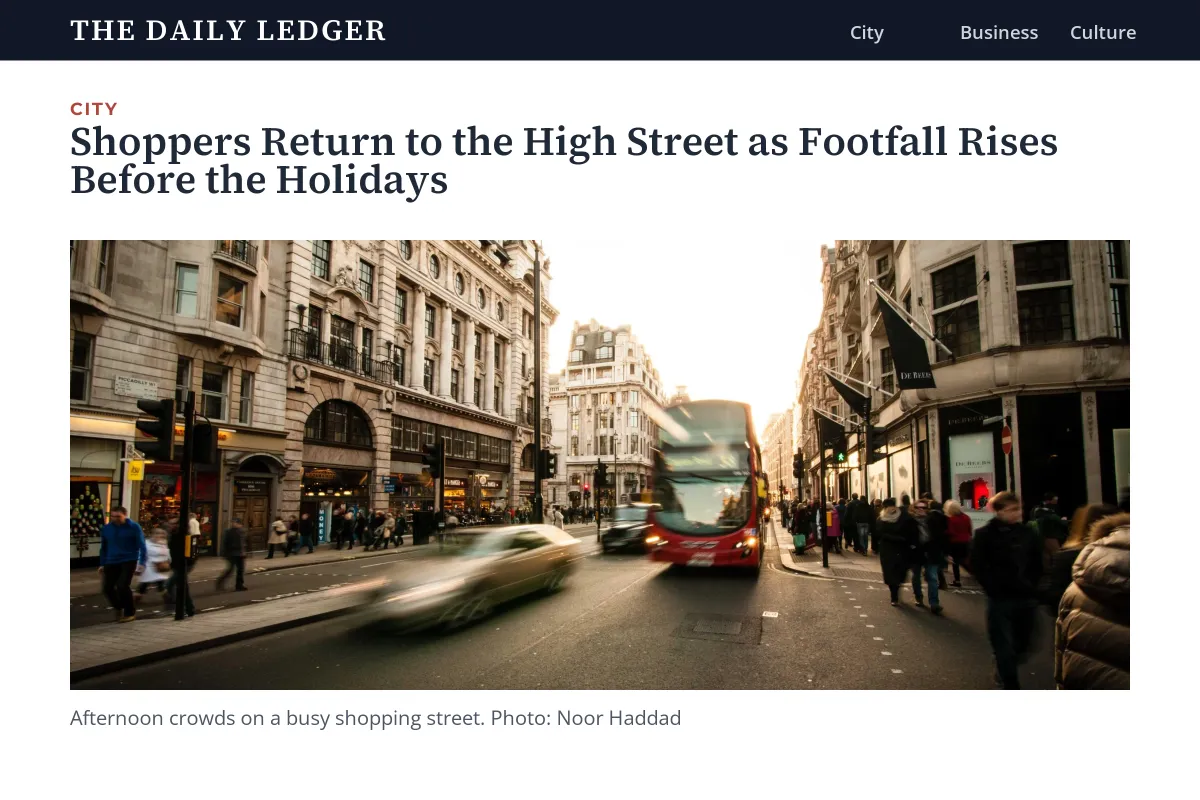
- Editorial use illustrates news, commentary or topics of public interest: articles, news blogs, documentaries, textbooks. Adobe Stock, for example, limits "Editorial Use Only" assets to newsworthy or public-interest topics and allows only minor technical adjustments, slight cropping or resizing.
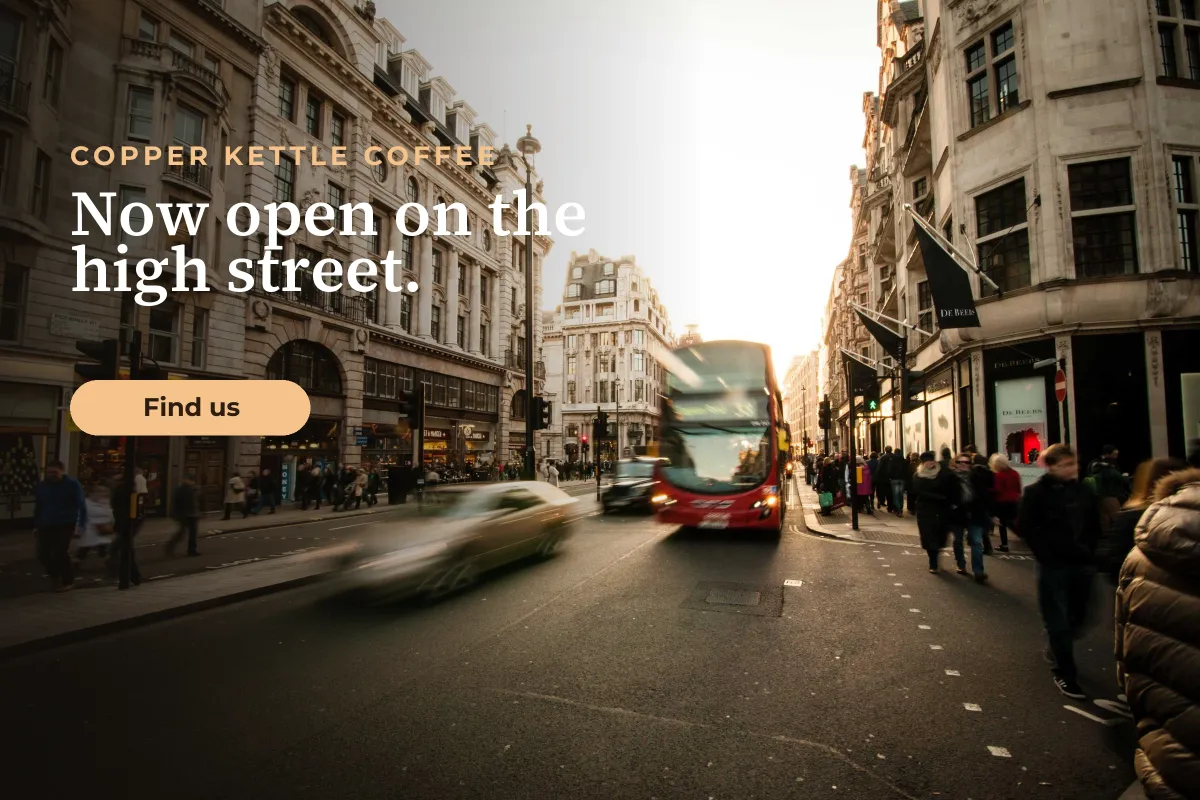
- Commercial use promotes or sells something: ads, product pages, brochures, packaging, sponsored posts. Adobe’s editorial terms list "advertisements, promotions, endorsements, advertorials, commercial blogs, merchandise" as commercial purposes.
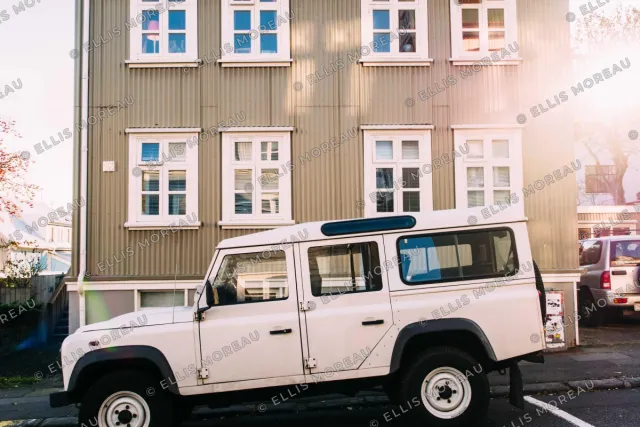
The street photo above shows why the line matters. It is full of recognizable people and shop signs. Using it to illustrate a news story is normally fine. Using it to sell coffee suggests those people and businesses endorse the product, which is why commercial use generally needs signed model and property releases. Photos without releases are often sold as editorial only. Rules on releases and image rights vary by country.
Exclusivity: Who Else Can Use the Photo
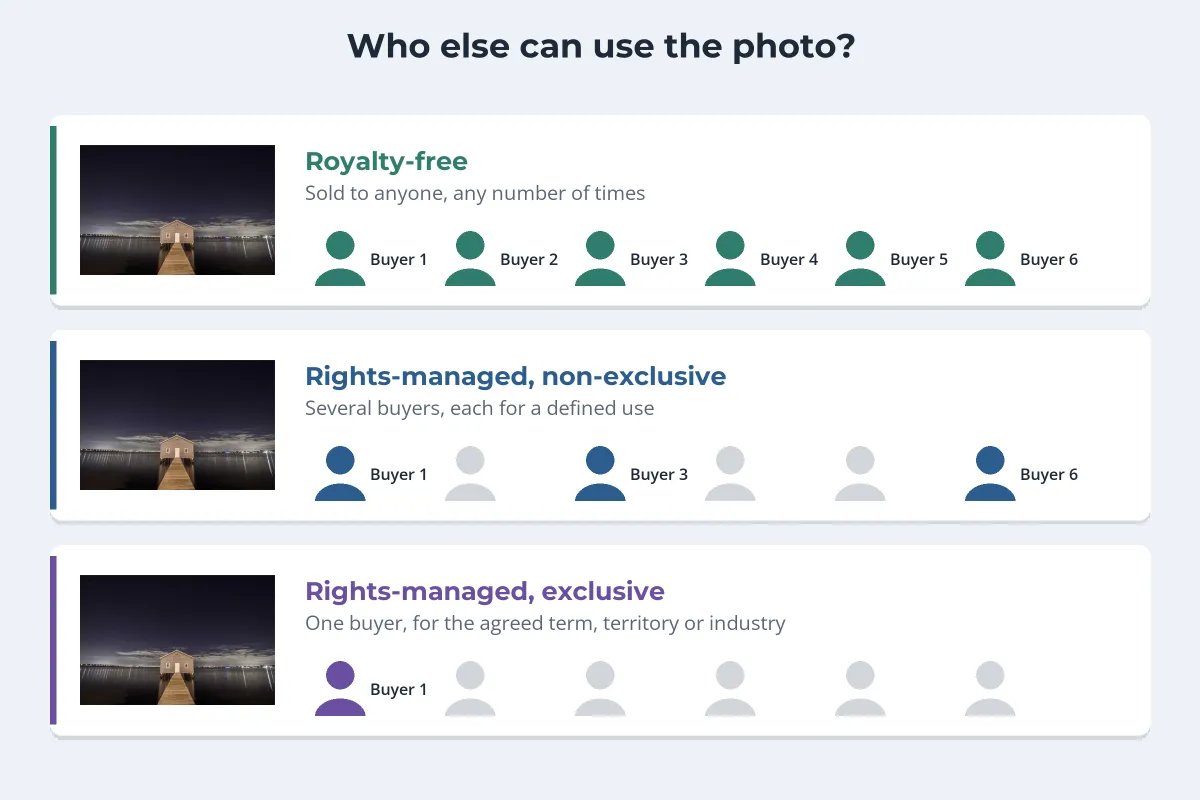
A royalty-free photo can show up in a competitor’s ad next week. For a brand building a campaign around one image, that is a real risk, and exclusivity is the cure. It is usually limited rather than total: exclusive in one industry, one region or for two years.
Once a photo has been sold royalty-free, or published under a Creative Commons license, you can no longer promise anyone it is exclusive, because others already hold rights to use it. Keep the images you might license exclusively out of royalty-free libraries and Creative Commons. A full transfer of the copyright, often called a buyout, is different again; see who owns the photos.
What Each Model Means for Pricing
| Royalty-free | Rights-managed | |
|---|---|---|
| How the price is set | Fixed per file or tier, or a subscription | Quoted per use |
| Typical income per sale | Lower | Higher |
| Sales per image | Can be many | Usually fewer |
| Effort per sale | Almost none | A conversation and a written license |
| Price rises with | The tier: more copies, merchandise rights | Reach, size, term, territory, exclusivity |
| Repeat income | From new buyers | From new buyers and renewals |
The practical rule for photographers selling direct: offer simple, royalty-free-style packages for low-risk uses such as a small business website, and quote rights-managed style for anything with real reach, such as advertising, packaging, a book cover or a campaign. The bigger the audience and the longer the use, the more a per-use price is worth the extra effort. For how to arrive at the number itself, see how much to charge for photo licensing.
Which Model Should You Offer?
| Situation | Better fit |
|---|---|
| Selling through a stock agency | Whatever the agency uses, now mostly royalty-free |
| A local business wants a photo for its website | Royalty-free-style flat fee |
| A brand wants a photo for a national ad | Rights-managed, priced for that use |
| A client asks to be the only one using it | Rights-managed with limited exclusivity |
| A magazine wants it for one article | Editorial rights-managed license |
| You want maximum reach rather than income | Creative Commons |
Whichever model you use, send a watermarked preview first and the clean file only after the license is agreed. Putting the license type on the preview tells anyone who comes across it that the photo is not free to use.
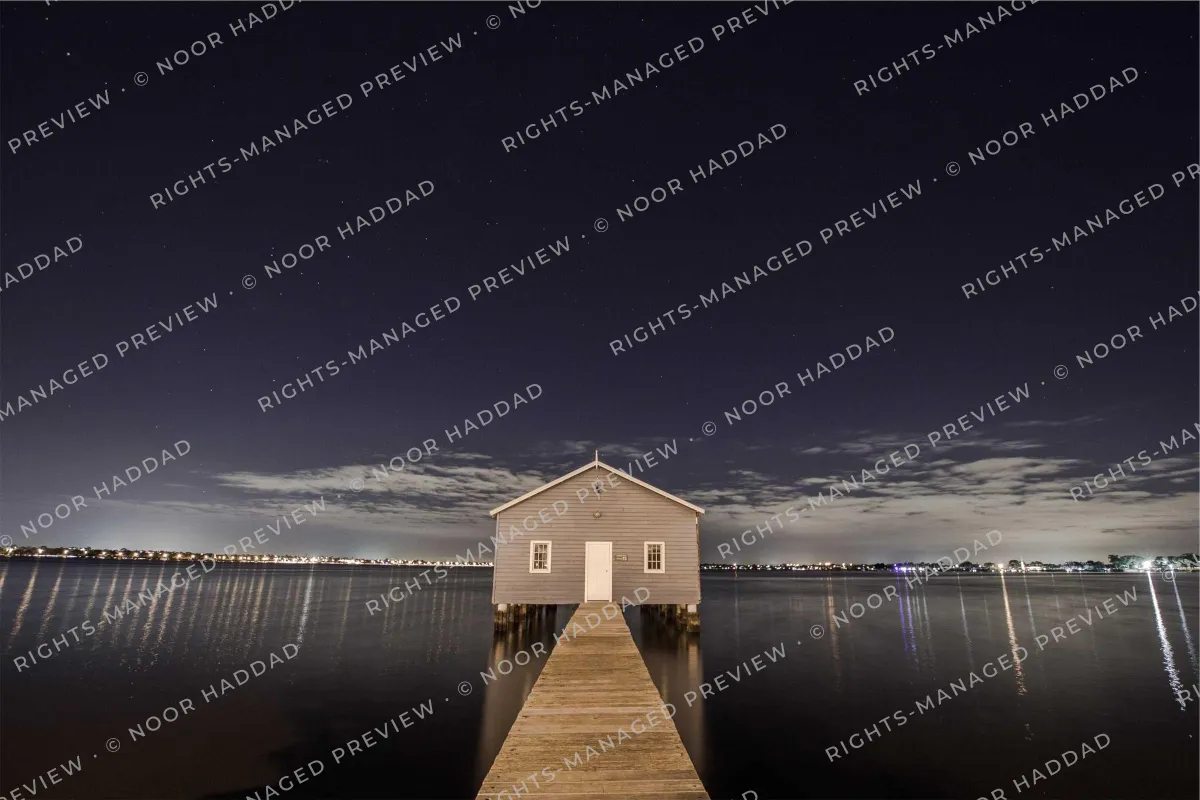
In Watermark.ws you can tile a line such as "Rights-managed preview · © Your Name" across a batch of photos, resize them for previewing, and save the setup as a template for the next request. For more on sending previews, see watermarking photos before sending them.
Sample photos: Desert road by Fré Sonneveld, Boathouse at night by Aurélien bellanger, Shopping street by David Marcu on Unsplash.