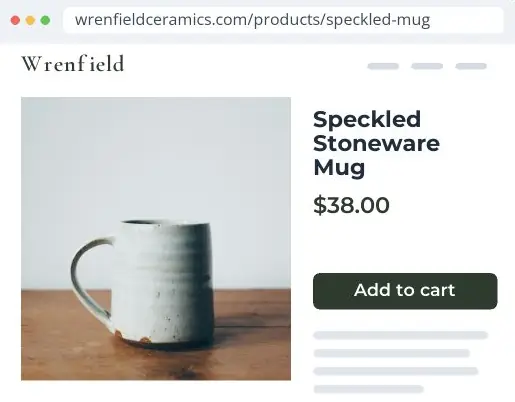
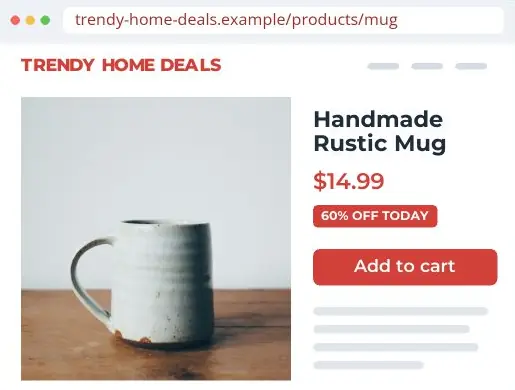
On this page
How to Remove a Copycat Store: The Short Answer
If a copycat store stole your product photos, you usually cannot make the whole store disappear, but you can get the copied pages taken down, and often that is enough to put it out of business. Product photos are protected by copyright the moment they are taken, so the tool is a copyright notice, sent first to whoever hosts the store.
- Save the evidence before you contact anyone: every page URL, screenshots and your originals.
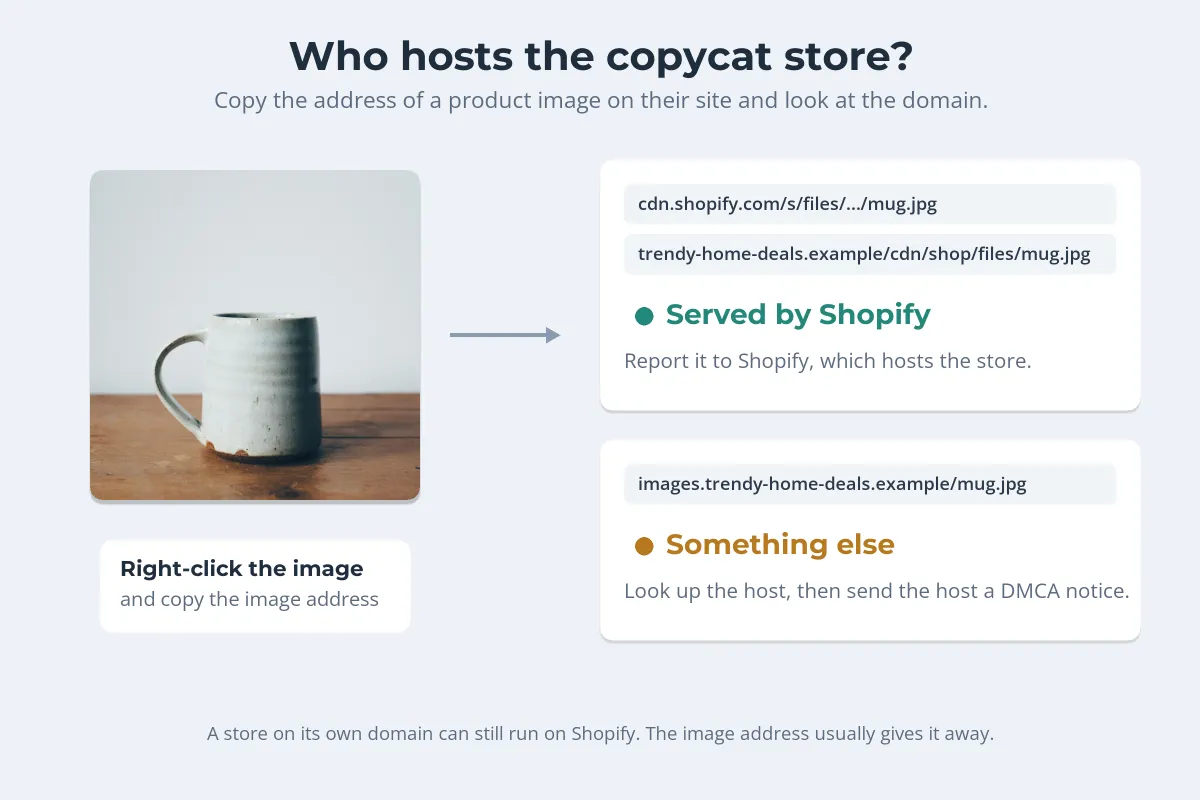
- Find out who hosts the store. If it runs on Shopify, report it to Shopify through its copyright form, listing every page.
- Not on Shopify? Send a DMCA notice to the web host.
- Follow the money and the traffic: marketplaces, ads, PayPal or Stripe, and search engines all have reporting routes.
- Make the next copy harder: keep originals and watermark the photos that copycats take most.
Why Copycat Stores Appear So Fast
Copying a store is easy. Some tools marketed as “store copiers” or product importers can pull product titles, descriptions and images from a public storefront into another store in minutes. Copycats use them to launch a store full of products that sold well somewhere else, then run ads to it.
Sometimes the copycat ships a cheaper lookalike. Sometimes it never ships anything. Either way, it is using your photos without permission, and that is the part you can act on quickly. You do not need to prove the products are fake; the photos are yours.
- Copyright covers your photos and your written descriptions, as long as you created them or own them.
- Trademark covers your brand name and logo. If they copied those too, that is a separate complaint, usually through a platform’s trademark report.
- Copyright does not cover the product idea itself. A similar mug photographed by someone else is not a copyright issue.
Step 1: Collect Evidence Page by Page
Copycat stores change fast, and some vanish the moment they get a complaint, only to reopen under a new name. Capture everything first:
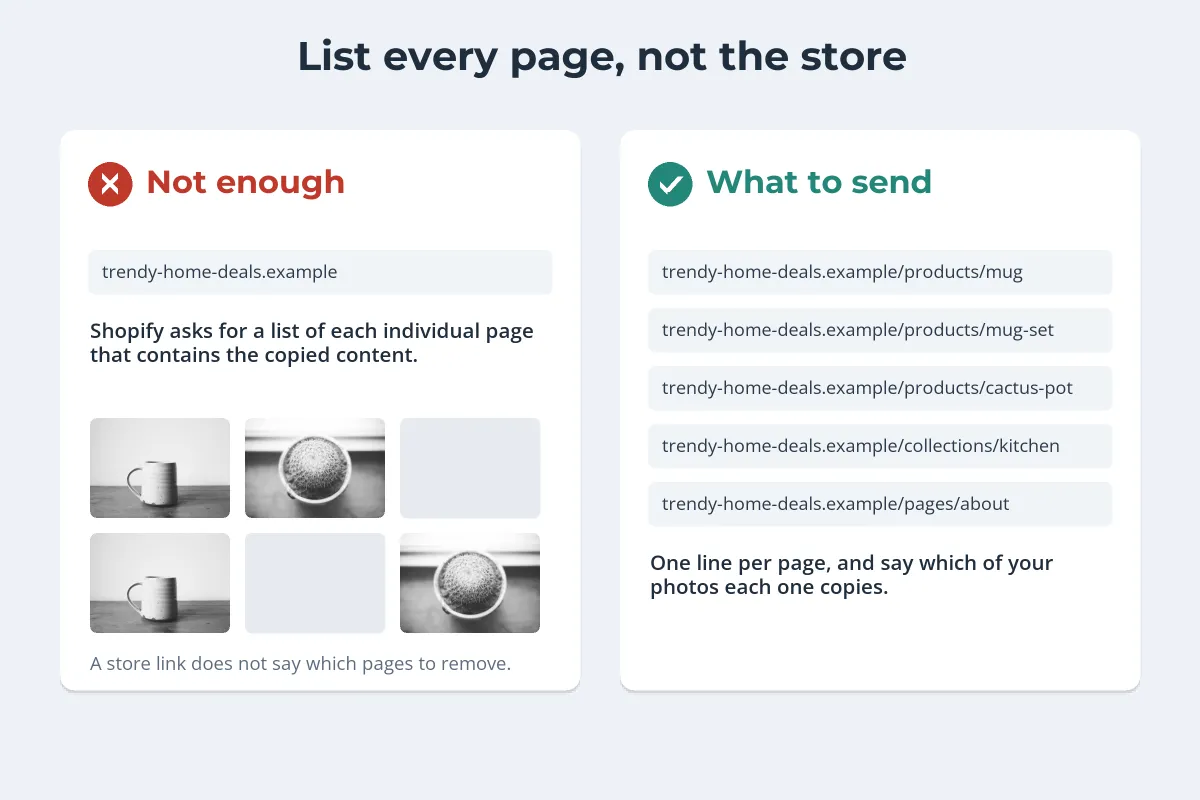
- The URL of every page that uses your photos: each product page, collection page and the about page if they copied that too.
- Full-page screenshots with the date, showing your photo in use and the price.
- Their ads, if you have seen them, with the advertiser’s name and where the ad leads.
- Your originals: the full-size files, the RAW files if you have them, and the date each photo went up on your store.
To find every copy, run a reverse image search on your best product photos. Copycats often use the same images across several stores and marketplaces. How to find stolen photos with reverse image search shows how.
Step 2: Report a Copycat Shopify Store
A store on its own domain can still run on Shopify, and then Shopify is the host that can remove the pages. The quickest check is the image address:
-
Open Shopify’s copyright form
Go to shopify.com/legal/dmca. Shopify asks you to log in to an existing Shopify account or create one before you report a merchant.
-
Say who you are
Your contact details, and whether you own the copyright or represent the owner. Shopify only processes complaints from the copyright owner or an authorized representative.
-
Describe your original work
Link to your own product pages and describe the photos. Shopify asks for copyright registration numbers and the country of registration if you have them, but registration is not required to report.
-
List the infringing pages
A direct link to every page on the copycat store that uses your photos, one per line. A general store link is not enough.
-
Confirm the declarations
That you believe in good faith the use is not authorized, and, under penalty of perjury, that you own or are authorized to act for the owner of the copyright. Then sign electronically.
You can also email the same information to Shopify’s designated agent at legal@shopify.com. Shopify notes that a copy of your notice, including your contact information, may be passed to the merchant, so use a business address. Shopify also warns that false or bad-faith notices are punishable by law, and that those harmed, including Shopify, may sue for damages.
Step 3: When the Store Is Not on Shopify
If the images come from somewhere else, the store runs on another platform or on its own server. Look up who hosts the domain with a hosting lookup tool, then send the host a DMCA takedown notice. Most hosts act on a complete notice even when the store owner ignores you. How to file a DMCA takedown notice covers the six things it must include and where to find the host’s copyright contact.
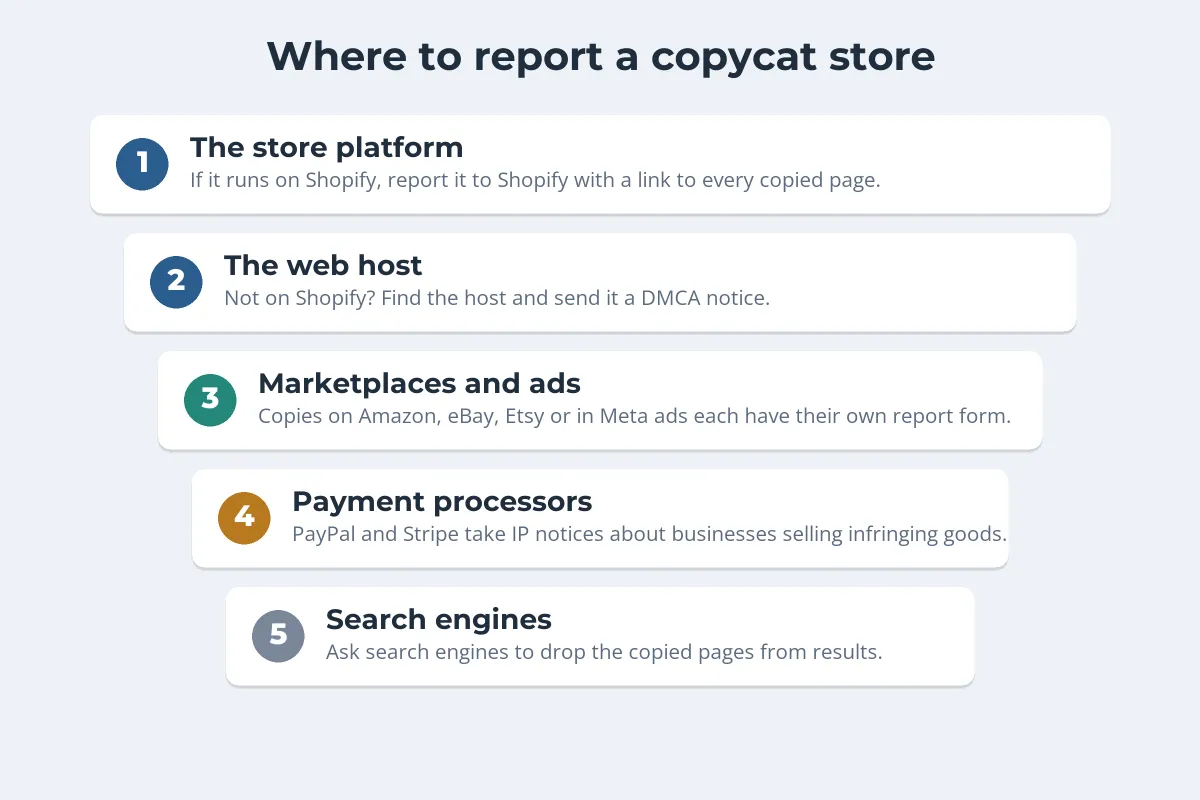
Outside the US, the same approach usually works, because large hosts and platforms accept notices from rights holders anywhere. In the EU, the Digital Services Act also requires hosting services to provide a way to report illegal content, including copyright infringement.
Step 4: Cut Off the Traffic and the Payments
A copycat store lives on ads and card payments. Even while the store itself is up, each of these can be reported separately:
| Where | How to report | Good to know |
|---|---|---|
| Amazon, eBay, Etsy | Each has its own intellectual property report: Amazon’s Report Infringement form, eBay’s VeRO program, Etsy’s IP reporting. | Copycats often list the same products, with your photos, on marketplaces too. |
| Ads on Facebook and Instagram | Meta’s copyright report form, with a link to the ad or a screenshot. | Capture the ad and its landing page first; ads stop running without warning. |
| PayPal | An Infringement Report under PayPal’s Acceptable Use Policy, emailed to infringementreport@paypal.com. | The report includes an indemnity to PayPal, so read it before you sign. |
| Stripe | An IP Notice through Stripe’s intellectual property notice process. | Stripe encourages evidence that the business currently uses Stripe, such as a test purchase. |
| Search engines | A copyright removal request for each copied page. | It removes pages from results, not from the web. |
The payment processor routes are written for businesses selling infringing goods or services, which is exactly what a copycat store selling knockoffs with your photos is doing. For Meta ads in detail, see how to report copyright infringement on Facebook.
Each notice is a legal statement, so only report photos you own or are authorized to enforce. If a copycat store keeps reappearing, is doing serious damage to your sales or copied your trademark, a lawyer can advise on further options.
Make Your Product Photos Harder to Reuse
You cannot stop a store copier from downloading a public image. You can make your photos less useful to a copycat and easier to prove are yours:
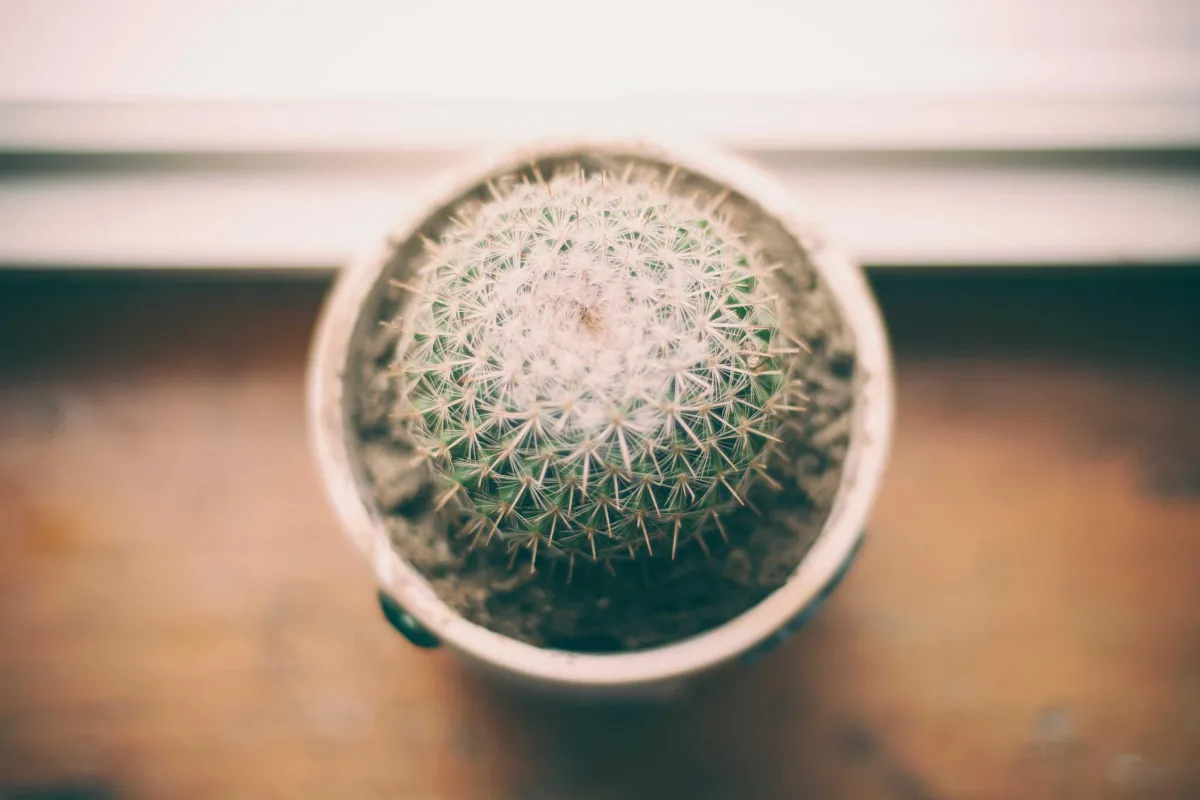 No watermark
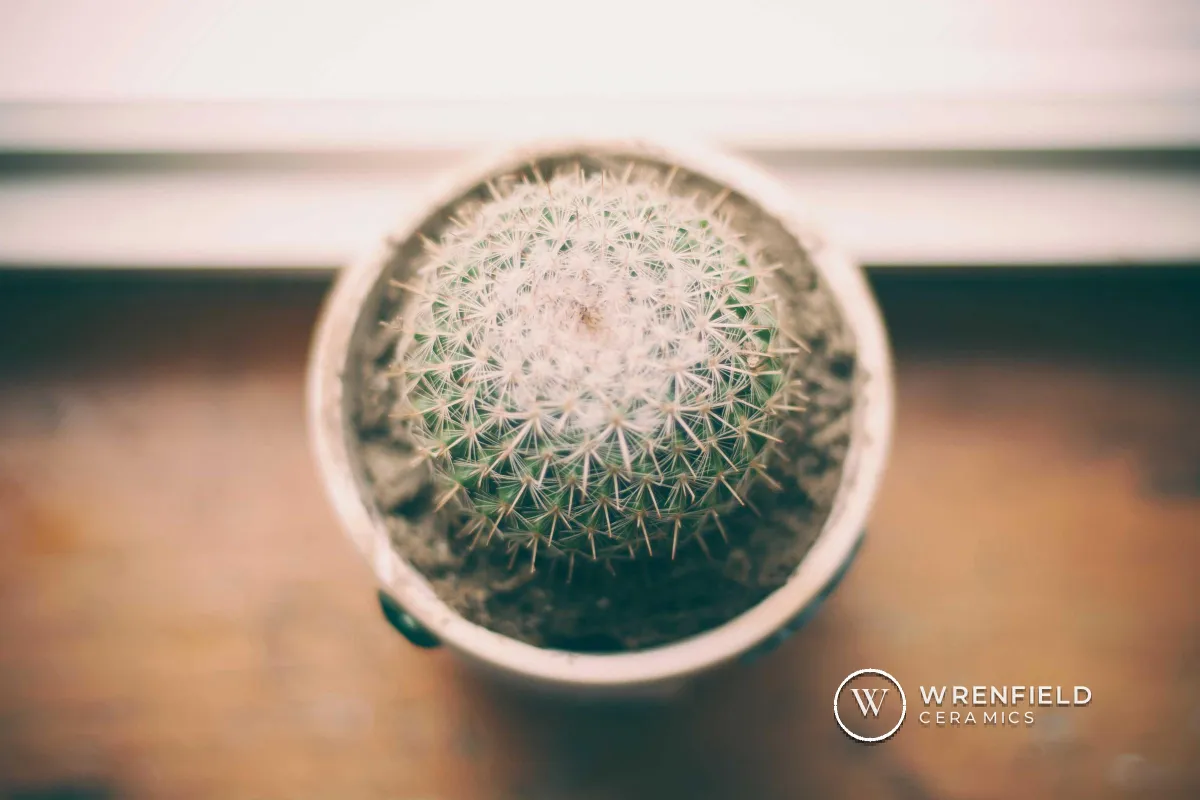 Small logo
- Brand the secondary photos. Marketplaces often want a clean main image, but lifestyle and detail shots can carry a small logo. A copycat using them advertises your brand, not theirs. Each marketplace draws the line in a different place: see Amazon and eBay’s image rules and whether you can watermark Etsy listing photos.
- Put the watermark inside the frame, near the product, where cropping it off spoils the photo.
- Keep your originals and upload dates organized, so every notice takes minutes.
- Search regularly for your best sellers’ photos, so you catch copies before they gather ad traffic.
Watermark.ws adds a logo or text watermark to a whole catalog of product photos in one batch and saves the setup as a template for the next drop. For how to do it without hurting conversions, see watermarking Shopify product photos and watermarking product photos.
Sample photos: Stoneware mug by Annie Spratt, Cactus in a pot by Oliver Pacas on Unsplash.